memoment editorial

2025 10 16 06 13 35

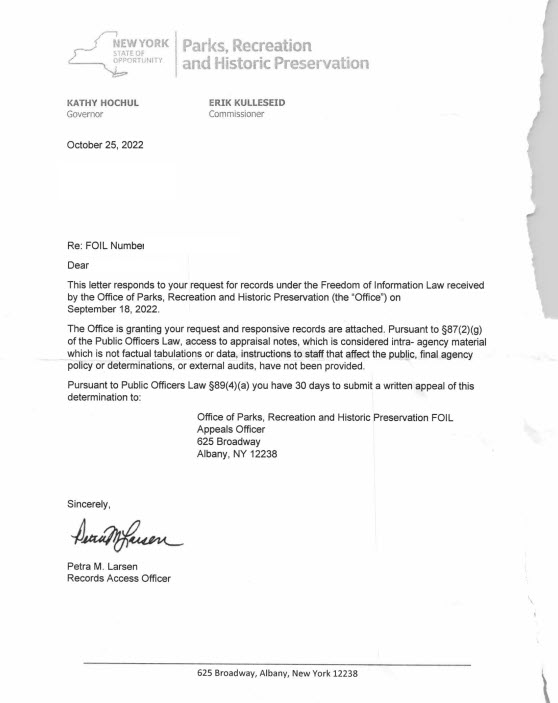
Thousands of Historical Artifacts Cataloged in Released NY Parks Databases

(Note: Photo graphic above is for illustrative purposes, and not a representation of actual holdings of the State of New York)

Released records from the New York State Office of Parks, Recreation, and Historic Preservation (OPRHP) reveal detailed inventories of the state’s vast collection of historical and archaeological artifacts. Released under the New York Freedom of Information Law (FOIL), the files catalog thousands of items curated and stored across the state’s museum, park, and research facilities.
The release includes structured database files listing artifact categories, site origins, materials, estimated time periods, and associated state collections. Items span centuries of New York’s cultural history, ranging from prehistoric Native American tools and pottery fragments to 19th- and 20th-century industrial and household objects.Continue scrolling for more…

The Databases
The released spreadsheets appear to represent the internal cataloging systems used by the agency’s archaeologists and curators. Together, they include thousands of records drawn from state-supervised excavations and site surveys conducted over decades.
Each database provides metadata fields such as:

Site code or excavation ID
Provenience and stratigraphic context
Artifact type and description
Material composition (e.g., bone, stone, ceramic, metal)
Associated cultural period or phase
Current repository or storage facility

The Historic Collections file serves as a high-level reference table summarizing objects held across different regional collections under state management.
Highlights and Notable Entries
A review of the datasets reveals a remarkable breadth of material documenting New York’s long human history. Among the more notable entries are:

Projectile points and stone tools from early prehistoric contexts, some listed with associated radiocarbon date ranges.
Colonial-era artifacts, including clay pipes, glass fragments, and iron implements recovered from 17th- and 18th-century settlement sites along the Hudson River and Long Island.
Industrial artifacts tied to 19th-century canal and railroad projects, reflecting New York’s rapid technological expansion.
Domestic objects such as ceramics, buttons, and utensils cataloged from urban excavations, providing insights into everyday life in early New York City and Albany.

While the databases are technical in format, they collectively represent one of the most comprehensive looks at how the state manages, tracks, and preserves its archaeological heritage.
The full spreadsheets are available for download through The Black Vault’s document archive below.
###
Document Archive
Historic_Collections.xlsx (11MB)
tblArchFieldCat.xlsx (3.5MB)
tblArtifactInvFirst_Fields_Requested.xlsx (20MB)
tblArtifactInvFirst_Updated_10_20_2022.xlsx (40MB)
tblArtifactInvSecond_Fields_Requested.xlsx (21MB)
tblArtifactInvSecond_Updated_10_20_2022.xlsx (42MB)
Response Letter

Follow The Black Vault on Social Media:

Thousands of Historical Artifacts Cataloged in Released NY Parks Databases Read More »

70702

Holding Ground: Ukraine, Russia, and the Politics of Persistence

Michael Kofman and Dara Massicot join Ryan to discuss the state of the front, how Ukraine and Russia are staying in the fight, the possible provision of Tomahawk Land Attack Missiles, contingencies expected and unexpected, the failures of Russian diplomacy, and what the most important developments of the year so far have been. 

Holding Ground: Ukraine, Russia, and the Politics of Persistence Read More »

Unheard FBI Audio Reveals Art Bell Discussing Threats, Rumors, and Radio Rivalries

The Black Vault first obtained and published Bell’s written FBI records in 2023. Those documents, covering investigations between 1998 and 2000, show that Bell contacted the Bureau after receiving messages and communications he considered threatening. The records include interviews with Bell, his associates, and several individuals named in the complaints.Continue scrolling for more…

In one report, agents wrote that Bell “was interviewed at his request concerning threats against his life.” He told investigators that he was host of a syndicated talk show that “airs to approximately 420 stations” and that the program “deals with fact and speculation concerning the paranormal, extra-terrestrials, unidentified flying objects and advanced technology aircraft of the United States.”
Art Bell
The file details how Bell began receiving “messages over the Internet from Filipino individuals and groups alleging that Bell had issued derogatory messages against Filipinos.” Bell denied the claims and told the FBI that “the bogus messages were from address ‘KatLover@artbell.com (Art Bell),’” adding that he had reason to believe they originated from a known server. The Bureau confirmed that Bell “maintains a genuine concern for his personal safety.”
While the written records contain heavy redactions and more than 150+ pages of fully withheld material, they reveal a series of federal inquiries across multiple field offices, documenting both online defamation and what Bell described as targeted harassment.
The newly released 16-minute audio file, made public in October 2025, captures Bell in conversation with an unidentified individual about the same period of turmoil. His voice conveys frustration and disbelief as he reacts to what had been said about him. At one point, Bell responds directly to an accusation:
“That is… completely false.”
Later, he alludes to his professional disputes in radio, saying:
“Talk Radio Network split away when I was purchased by Premier Radio Networks, and Talk Radio Network decided they were gonna compete with me.”
Throughout the recording, long gaps and muted portions suggest significant redactions or removed audio, consistent with other law enforcement FOIA releases.
Together, the 2023 and 2025 releases offer a documented glimpse into the final years of the FBI’s correspondence with Bell; a period marked by unsubstantiated threats, online impersonation, and personal anxiety for one of broadcasting’s most distinctive voices.
###
Document Archive
Art Bell FBI File Release – 2023 – [77 Pages, 4MB]
Audio Archive
Art Bell FBI Audio Recording – Released 2025
Download Raw Audio File, as released by the FBI – [MP3 Files, 23MB] (Transcript below)
[embedded content]
Audio Transcript
The following audio transcript was created by The Black Vault. Some errors may occur, during the process:
[00:00:00.000 – 00:00:08.840] Hi, is it?[00:00:10.380 – 00:00:10.820] Hi.[00:00:16.500 – 00:00:17.820] Well, I’m happy to meet you.[00:00:27.820 – 00:00:28.340] Okay.[00:00:28.340 – 00:00:29.840] Okay, um…[00:00:29.840 – 00:00:36.340] I guess, you know, I’ve heard some rumors, you know, about, um…[00:00:37.060 – 00:00:39.600] Maybe, I don’t know, somebody who was in…[00:00:39.600 – 00:00:39.980] Life.[00:00:40.940 – 00:00:42.160] And that’s about all I know.[00:00:42.640 – 00:00:45.340] I’ve had, you know, I’ve had my own disagreements, uh, with…[00:00:46.000 – 00:00:48.520] Um, nothing life-shattering.[00:00:49.520 – 00:00:50.080] Uh…[00:00:50.080 – 00:00:57.340] Okay, okay, then, you know, and, um…[00:00:58.340 – 00:01:08.700] So I just kept my mouth shut and didn’t say anything.[00:01:12.620 – 00:01:13.060] So…[00:01:13.060 – 00:01:13.460] Okay.[00:01:28.340 – 00:01:32.340] Okay.[00:01:45.120 – 00:01:46.340] Well, you were…[00:01:46.340 – 00:01:48.060] Is that correct?[00:01:53.940 – 00:01:54.500] Okay.[00:01:55.500 – 00:01:56.020] Um…[00:01:58.340 – 00:02:08.039] Well, don’t be afraid.[00:02:08.440 – 00:02:10.100] What you say with me stops here.[00:02:19.640 – 00:02:20.660] I didn’t even know that.[00:02:28.340 – 00:02:32.900] Just because he was angry with me?[00:02:36.660 – 00:02:37.380] It’s not?[00:02:37.380 – 00:02:37.440] No.[00:02:50.540 – 00:02:52.520] Right?[00:02:52.520 – 00:02:52.600] Right?[00:02:52.600 – 00:02:52.620] Right?[00:02:52.620 – 00:02:52.660] Right?[00:02:52.660 – 00:02:52.720] Right?[00:02:52.720 – 00:02:58.320] Right?[00:02:58.340 – 00:02:58.920] Mm-hmm. [INAUDIBLE][00:02:58.920 – 00:02:58.960] Right? [INAUDIBLE][00:02:58.960 – 00:02:59.020] He was angry with me. [INAUDIBLE][00:02:59.020 – 00:02:59.480] Uh… [INAUDIBLE][00:02:59.480 – 00:02:59.560] Okay. [INAUDIBLE][00:02:59.560 – 00:02:59.580] Okay. [INAUDIBLE][00:03:06.580 – 00:03:11.160] Well, I don’t understand why you would have this much anger at me or what the, you know, [INAUDIBLE][00:03:11.240 – 00:03:14.080] something that even goes beyond anger because I kind of… [INAUDIBLE][00:03:15.820 – 00:03:17.620] Yeah? [INAUDIBLE][00:03:23.020 – 00:03:24.420] Well… [INAUDIBLE][00:03:24.420 – 00:03:24.460] Yeah. [INAUDIBLE][00:03:24.460 – 00:03:24.540] Yeah. [INAUDIBLE][00:03:24.540 – 00:03:24.660] I… [INAUDIBLE][00:03:24.660 – 00:03:25.100] I… [INAUDIBLE][00:03:25.100 – 00:03:25.420] I… [INAUDIBLE][00:03:25.420 – 00:03:26.320] I… [INAUDIBLE][00:03:26.320 – 00:03:26.600] I… [INAUDIBLE][00:03:26.600 – 00:03:26.740] I… [INAUDIBLE][00:03:26.740 – 00:03:27.000] I… [INAUDIBLE][00:03:27.280 – 00:03:27.540] I… [INAUDIBLE][00:03:27.540 – 00:03:28.260] I… [INAUDIBLE][00:03:28.340 – 00:03:31.180] fire away[00:03:38.960 – 00:03:42.220] well are you afraid of[00:03:44.940 – 00:03:50.080] okay I guess the obvious question is why I mean[00:03:51.900 – 00:03:54.820] okay[00:03:58.340 – 00:04:00.400] you[00:04:05.220 – 00:04:07.280] you[00:04:21.459 – 00:04:23.520] you[00:04:28.340 – 00:04:31.620] got sure [INAUDIBLE][00:04:34.560 – 00:04:36.620] you [INAUDIBLE][00:04:41.560 – 00:04:44.560] really [INAUDIBLE][00:04:46.260 – 00:04:48.340] you [INAUDIBLE][00:04:58.340 – 00:05:00.180] My God.[00:05:28.340 – 00:05:49.760] That is a…[00:05:49.760 – 00:05:53.480] Completely false.[00:05:58.340 – 00:06:00.460] What?[00:06:13.460 – 00:06:15.120] He won’t have me killed.[00:06:20.380 – 00:06:23.160] I didn’t…[00:06:28.340 – 00:06:33.880] And he…[00:06:33.880 – 00:06:36.880] When they were so unhappy with it,[00:06:37.380 – 00:06:38.120] that they…[00:06:38.120 – 00:06:39.620] They made that decision.[00:06:39.740 – 00:06:40.720] I have nothing to do with that.[00:06:41.260 – 00:06:43.320] They disliked me so much,[00:06:43.660 – 00:06:44.360] that they…[00:06:44.360 – 00:06:45.320] I didn’t.[00:06:45.400 – 00:06:46.340] I had nothing to do with it.[00:06:48.280 – 00:06:49.480] Not a thing.[00:06:53.580 – 00:06:54.340] Not a thing.[00:06:58.340 – 00:07:05.740] As in actually burning…[00:07:05.740 – 00:07:07.540] Burning my house or…[00:07:07.540 – 00:07:10.620] Destroying my career.[00:07:11.260 – 00:07:11.760] I see.[00:07:13.480 – 00:07:15.880] Well, gee, there was this little thing[00:07:15.880 – 00:07:18.460] that got out on the Internet about Filipinos.[00:07:19.100 – 00:07:20.320] I wonder if he’s behind that.[00:07:21.860 – 00:07:23.240] Now that I think about it,[00:07:23.260 – 00:07:24.800] it came from a server.[00:07:24.800 – 00:07:24.880] A server.[00:07:28.340 – 00:07:29.740] That much we found out for sure.[00:07:58.340 – 00:08:16.360] I don’t know.[00:08:28.340 – 00:08:32.840] How long were you…[00:08:32.840 – 00:08:50.840] There was a rumor…[00:08:58.340 – 00:09:01.700] He wanted her killed.[00:09:02.580 – 00:09:03.740] The story was that…[00:09:05.740 – 00:09:07.580] That’s what was going around.[00:09:22.380 – 00:09:23.720] Yeah, that’s what I had heard.[00:09:28.340 – 00:09:32.400] And probably up until fairly recently.[00:09:32.400 – 00:09:33.400] Otherwise…[00:10:02.400 – 00:10:15.180] Or were these, like, you know,[00:10:15.300 – 00:10:17.040] diary notes that you were making or something?[00:10:23.820 – 00:10:24.900] Holy smokes.[00:10:24.900 – 00:10:28.900] Yes.[00:10:32.400 – 00:10:42.460] Look, I knew he had some emotional problems[00:10:42.460 – 00:10:43.900] because he went through this…[00:10:49.500 – 00:10:51.900] Then he was accused of…[00:10:53.560 – 00:10:57.280] And there was an investigation I know about all of that.[00:10:58.560 – 00:11:00.900] That was back in the days…[00:11:00.900 – 00:11:02.380] And I thought that was kind of weird then.[00:11:02.380 – 00:11:02.520] I don’t understand.[00:11:05.080 – 00:11:05.640] Whew.[00:11:15.140 – 00:11:16.500] Well, look, be safe.[00:11:17.520 – 00:11:18.620] I said be safe.[00:11:18.620 – 00:11:18.660] Be safe.[00:11:32.380 – 00:11:40.840] We [INAUDIBLE][00:11:40.840 – 00:11:41.880] seldom talk to either. [INAUDIBLE][00:11:41.880 – 00:11:42.660] Example! [INAUDIBLE][00:11:42.680 – 00:11:43.540] I met a girl who was a lawyer. [INAUDIBLE][00:11:43.540 – 00:11:46.500] Which doesn’t blend in… [INAUDIBLE][00:11:46.500 – 00:11:47.260] That wasn’t really a lawyer! [INAUDIBLE][00:11:47.260 – 00:11:48.100] I think she was… [INAUDIBLE][00:11:48.100 – 00:11:49.560] Well, what about what she did? [INAUDIBLE][00:11:49.760 – 00:11:51.940] She was trouble making. [INAUDIBLE][00:11:51.960 – 00:11:52.160] Sometimes when it’d… [INAUDIBLE][00:11:52.160 – 00:11:53.780] Well, did he actually do anything to her? [INAUDIBLE][00:11:54.000 – 00:11:56.160] I was not interested in any initial differences with her. [INAUDIBLE][00:11:56.240 – 00:11:57.240] But I mean… [INAUDIBLE][00:11:57.300 – 00:11:58.960] I’d like to see her stop [INAUDIBLE][00:11:58.960 – 00:11:59.620] before she finished her first job. [INAUDIBLE][00:11:59.620 – 00:11:59.780] I… [INAUDIBLE][00:11:59.780 – 00:11:59.880] I, um… [INAUDIBLE][00:11:59.880 – 00:12:00.140] Maybe I had an issue with her work. [INAUDIBLE][00:12:00.140 – 00:12:00.480] And that would… [INAUDIBLE][00:12:00.480 – 00:12:00.960] But anyway, [INAUDIBLE][00:12:00.960 – 00:12:01.100] Well… [INAUDIBLE][00:12:01.100 – 00:12:01.120] I just got a run on you. [INAUDIBLE][00:12:01.120 – 00:12:01.180] I’m going to tell you, [INAUDIBLE][00:12:01.180 – 00:12:01.240] Erica. [INAUDIBLE][00:12:01.240 – 00:12:01.540] What does it do? [INAUDIBLE][00:12:01.540 – 00:12:10.960] Yeah, actually, that’s all it was.[00:12:10.960 – 00:12:15.240] And actually, I was just upset with him.[00:12:31.540 – 00:12:39.320] Yeah, I know.[00:12:39.320 – 00:12:40.320] What the hell are you doing?[00:12:40.320 – 00:12:49.380] I thought we just agreed.[00:12:49.380 – 00:12:50.380] There you are.[00:12:50.380 – 00:12:53.440] So then I sort of, for a while, I didn’t call him.[00:12:53.440 – 00:12:54.480] I didn’t talk to him.[00:12:54.480 – 00:12:59.140] I never said a bad word, because I don’t do that.[00:12:59.140 – 00:13:01.380] And then…[00:13:01.540 – 00:13:06.780] Yeah, he started…[00:13:06.780 – 00:13:19.500] Yeah, and so obviously when he starts…[00:13:19.500 – 00:13:23.820] Thinking it’s better just to keep my mouth shut.[00:13:23.820 – 00:13:31.040] And so obviously when he’s…[00:13:31.040 – 00:13:31.520] And I called him.[00:13:31.520 – 00:13:42.280] I called him a couple of times and I said, what are you doing?[00:13:42.280 – 00:13:43.280] Or something like that.[00:13:43.280 – 00:13:47.080] And it would get out.[00:13:47.080 – 00:13:48.080] And I…[00:13:48.080 – 00:13:49.080] Yeah.[00:13:49.080 – 00:13:54.400] Yeah, you’ve got it.[00:14:01.520 – 00:14:14.980] And I got a call from the radio.[00:14:14.980 – 00:14:20.280] And as far as that was concerned, that was my…[00:14:20.280 – 00:14:22.820] Talk radio networks split away when I was purchased by Premier Radio Networks.[00:14:22.820 – 00:14:25.480] And Talk Radio Network decided they were gonna compete with me.[00:14:25.480 – 00:14:26.480] Talk Radio Network.[00:14:26.480 – 00:14:27.480] And in doing so, they…[00:14:27.480 – 00:14:28.480] And…[00:14:28.480 – 00:14:29.480] And I…[00:14:29.480 – 00:14:30.440] I…[00:14:30.440 – 00:14:31.400] Yeah.[00:14:31.400 – 00:14:33.860] I had advised you.[00:14:51.220 – 00:14:52.060] Not by me.[00:14:52.160 – 00:14:53.940] I didn’t have a damn thing.[00:15:01.400 – 00:15:03.300] Well, that’s simply untrue.[00:15:04.140 – 00:15:05.160] That’s simply untrue.[00:15:05.340 – 00:15:07.560] But I guess…[00:15:07.560 – 00:15:09.160] So…[00:15:09.160 – 00:15:10.500] So be it.[00:15:15.300 – 00:15:16.860] Look, I appreciate[00:15:16.860 – 00:15:18.960] communicating with you, and[00:15:18.960 – 00:15:21.660] I sure do[00:15:21.660 – 00:15:22.480] hope you’re okay.[00:15:27.480 – 00:15:28.240] Um…[00:15:31.400 – 00:15:52.700] Probably you should take the[00:15:52.700 – 00:15:53.780] that you have.[00:15:59.940 – 00:16:01.240] I appreciate the call.[00:16:01.400 – 00:16:02.740] I wouldn’t ask for one.

Follow The Black Vault on Social Media:

Unheard FBI Audio Reveals Art Bell Discussing Threats, Rumors, and Radio Rivalries Read More »

70702

Is Europe Stepping Up on Defense?

Well, is it? From defense innovation, to scaling capabilities, to budgets, the answers aren’t easy. Ryan was joined by General Sir Richard Barrons of the United Kingdom and Peter Michael Nielsen of Denmark to sort through these issues. Barrons had a storied military career and most recently co-led his country’s Strategic Defence Review. Nielsen is Denmark’s deputy national armaments director, a role that has unique weight now as Denmark holds the E.U. presidency.  This episode was recorded live at a reception in London hosted by our friends at Helsing (https://helsing.ai).

Is Europe Stepping Up on Defense? Read More »

Botober 2025

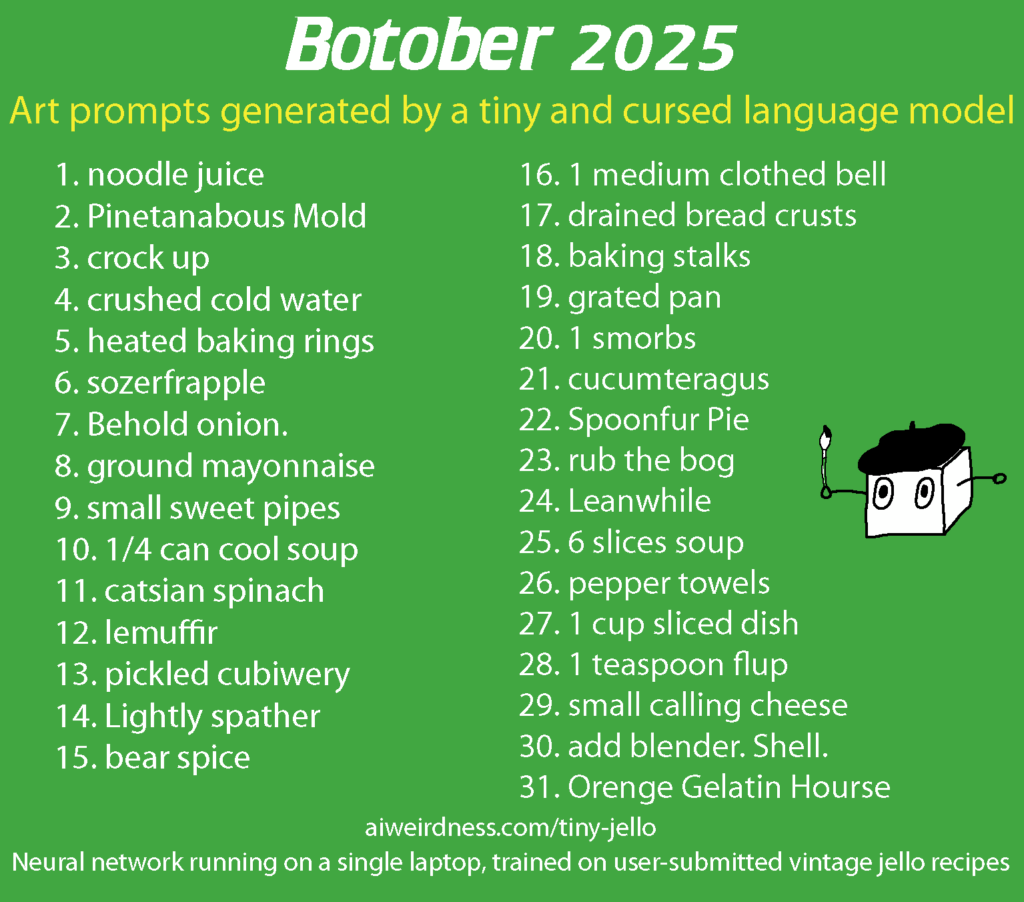
Botober 2025: Terrible recipes from a tiny neural net

After seeing generated text evolve from the days of tiny neural networks to today’s ChatGPT-style large language models, I have to conclude: there’s something special about the tiny guys.Maybe it’s the way the tiny neural networks string together text letter by letter just based on what you’ve given it, rather than drawing from prior internet training. It’s not secretly drawing on some dark corner of the internet, it’s just mashing together statistically likely letter combinations.So, when someone asked me for a list of October art prompts, like I’ve made in the past (2019, 2020, 2021, 2022, 2023, 2024), my instinct was not to reach for the most capable language model currently in existence, but for the tiniest one I’ve ever worked with. I installed a version of char-rnn, originally introduced by Andrej Karpathy in 2015, and updated by my friend Dylan Hudson to work with modern libraries. For training data, I gave it a set of about 800 vintage jello recipes submitted by users in 2020.Char-rnn’s recipes are even less comprehensible than GPT-2’s were in 2020. For example, this recipe for “One Banana Salad” which you’ll note contains zero bananas.One Banana Salad2 small chow cooked cream cheese1/2 teaspoon salt1 tablespoon lemon juice1 teaspoon salt1 cup boiling water_ cup mayonnaise1 cup mayonnaise, chopped1 tablespoon gelatine2 tbsp salt1/4 cup chopped pimiento1 cup sour cream1 tbsp, onion salt1 cup drained rind-chopped cream cheese4 hours or until dissolved (ibening in the chicken stand the chopped chicken breass cucumber in saucepan. Serve with stewess 1 dip each salad dly white olives, and the chopped water and 1 1/2 cups.I generated a bunch of recipes and chose my favorite ingredients and cooking directions for use in the art prompts. Are all of them possible to art? No idea. Are these the worst October drawing prompts released this year? Probably!If you draw any of them, tag them with #botober2025 so I can see how it turned out!Bonus content for supporters: a list of rejected drawing prompts, and a couple more recipes.

Subscribe now

Botober 2025: Terrible recipes from a tiny neural net Read More »

iss070e001252

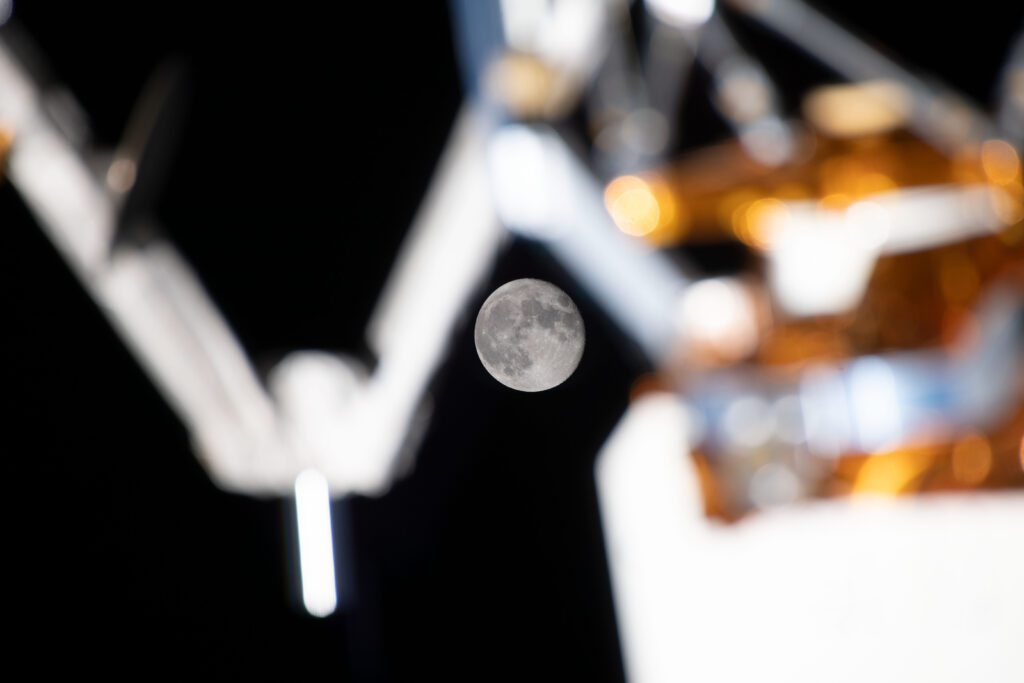
International Space Station: Launching NASA and Humanity into Deep Space

Curiosity and the desire to explore are traits deeply rooted in human nature. Space exploration is no exception; it reflects humanity’s timeless drive to seek new horizons, challenge our limits, and understand our universe.The advancements of modern civilization—from the electricity that powers our homes to basic hygienic breakthroughs that ensure our health— happened thanks to humanity’s dedication to expanding our knowledge and transforming our world. Similarly, before we can venture into deep space, we must expand our knowledge to understand life beyond Earth. The International Space Station provides the platform for sharpening the skills, technology, and understanding that has springboarded humanity forward, leading us back to the Moon, Mars, and beyond.
In November 2025, NASA and its international partners will surpass 25 years of continuous human presence aboard the International Space Station. As NASA prepares for Artemis missions to the Moon and sets sights on Mars, the space station continues to enable groundbreaking research not possible on Earth, making significant strides in our journey farther into the final frontier.

Space presents an entirely new physical environment with a unique set of challenges. Without Earth’s gravity, researchers first needed to master techniques for basic tasks like drinking water, sleeping, exercising, and handling various materials. Fundamental research in the early days of the space station helped us address these basic challenges and move forward to more advanced physics, building multiple space-based research facilities, developing life support systems, and even improving consumer products for life on Earth.
The human body experiences challenges in space like adapting to different gravitational fields and living for long periods in a closed environment. For example, fluid shifts in the body due to microgravity can cause changes with the eyes, brain, bones, muscles, and cardiovascular system. Being able to see, breathe, and function optimally are critical to living and working in space. Research aboard the space station is producing solutions to these challenges and equipping humans for deep space exploration though research like simulating moon landings to clarify how gravitational transitions affect piloting capabilities and decision-making.

As missions venture farther from Earth, reliable technologies and self-sustaining ecosystems become essential. The space station provides a testbed to refine these systems before humans travel to distant destinations.
Food, water, and air are among the basic needs for human survival. Thanks to testing aboard the space station, we have developed state-of-the-art life support systems that could be used on future commercial space stations and the Artemis missions. The space station also has enabled testing of evolving technologies to recycle air, water, and waste. In the U.S. segment of space station, NASA achieved 98% water recovery, the ideal level needed for missions beyond low Earth orbit.
Deep space missions could last several years, and astronauts will need enough food to sustain them the entire time. Packaged food can degrade and lose nutrients and vitamins over time, and a deficiency in vitamins can cause health issues. Growing and producing fresh foods and nutrients will be vital during these missions. Over 50 species of plants have been grown aboard the space station, including a variety of vegetables, leafy greens, grains, and legumes. Scientists are testing different systems for scalable crop growth, including aeroponic and hydroponic systems.  Research is also being conducted to produce vital nutrients in orbit using microbes.
Researchers have also advanced 3D printing in space, enabling astronauts to make tools and parts on-demand. This ability is especially important in planning for missions to the Moon and Mars because additional supplies cannot quickly be sent from Earth and cargo capacity is limited. Experiments on the space station have made it possible to 3D print plastic parts and tools, and test ways to reuse waste like plastic bags and packing foam as material for 3D printers. In 2024, ESA (European Space Agency) successfully 3D printed the first metal part aboard space station, a step towards more diverse manufacturing during future missions.

Before astronauts explore new terrains, we first must collect data and imagery to better characterize the surface of these cosmic destinations. Astronauts aboard the space station have collected photographs to document Earth’s surface through Crew Earth Observations. Now, those same techniques are being adapted for Artemis II , where astronauts will use handheld cameras to capture images of the Moon’s surface—including the largely unexplored far side. These observations will increase our understanding of the lunar environment and help prepare for exploration missions.
When they land, astronauts will need shelter from radiation, debris, and contaminants. Technology demonstrations aboard the space station tested the packing techniques, protection capabilities, and venting systems of lightweight inflatable habitats. For more permanent structures, space station experiments have studied how concrete hardens in reduced gravity and tested 3D printing nozzles designed to use regolith – the dust present on the Moon and Mars- as material for constructing habitats on-site.
Robotic experiments aboard the space station are demonstrating tasks like moving objects, early detection of equipment issues, 3D sensing, and mapping. Robots could support astronauts during deep space missions by performing routine tasks, responding to hazards, and reducing the need for risky spacewalks.
Analyzing samples though DNA sequencing has historically been expensive and time intensive, limiting its use in space. Advancements have led to DNA processing aboard the space station and refined sequencing techniques. Not only can this ability potentially identify DNA-based life off Earth, but it is necessary for microbial monitoring to keep crews safe and healthy.
Communications is another important component of space exploration. NASA used the space station to demonstrate laser communications capabilities, enabling transmission of more data at faster rates. This communication could serve as a critical two-way link to keep astronauts connected to Earth as they explore deep space.

Experiments and technologies first tested aboard the space station made their way around the Moon in an uncrewed Orion vehicle during the Artemis I mission. Radiation technology verified on station confirmed that the Orion spacecraft’s design protects against harmful exposure. An identical BioSentinel experiment on both space station and Artemis I studied how yeast cells respond to different levels of space radiation.
Additionally, Moon Imagery research calibrated cameras for Orion’s navigation systems using photos of the Moon taken from space station, ensuring accurate guidance even if communication with Earth is lost.
Three experiments that landed on the Moon during Firefly Aerospace’s Blue Ghost Mission-1 were made possible by earlier research on the space station. These studies help improve space weather monitoring, tested computer recovery from radiation damage, and advanced lunar navigation systems.
Methods used to conduct research on the space station are making their way aboard Artemis II, a mission to place four astronauts in orbit around the Moon. Adapted from human health measurements conducted during space station missions, measurements taken on Artemis II crew will expand a repository of human health data to provide a snapshot of how spaceflight affects the human body beyond low Earth orbit. NASA researchers hope to use this data repository to develop protocols aimed at keeping astronauts healthy on missions to the Moon, Mars, and beyond. Small devices called tissue or organ chips, used for several experiments aboard space station, will continue their scientific journey in the lunar environment. Organ-chip research could improve crew protection measures and create personalized medical treatments for humans, on Earth and in space.
The International Space Station remains a vital scientific platform, providing the foundation needed to survive and thrive as humanity ventures into the unexplored territories of our universe.
Lea esta historia en español aquí.

International Space Station: Launching NASA and Humanity into Deep Space Read More »

iss047e137096orig

Golden Lake

Golden sunglint highlights Lake Balkhash in this May 31, 2016, photo taken from the International Space Station. The large lake in Kazakhstan is one of the largest lakes in Asia and is the 15th largest lake in the world.
Since the space station became operational in November 2000, crew members have produced hundreds of thousands of images of the land, oceans, and atmosphere of Earth, and even of the Moon through Crew Earth Observations. Their photographs of Earth record how the planet changes over time due to human activity and natural events. This allows scientists to monitor disasters and direct response on the ground and study a number of phenomena, from the movement of glaciers to urban wildlife.
In addition, other activity aboard the space station helps inform long-duration missions like Artemis and future human expeditions to Mars.
Image credit: NASA/Tim Kopra

Golden Lake Read More »

Cogs of War: Moving at the Speed of War with Horacio Rozanski of Booz Allen

The future fight won’t be won by those with the biggest budgets, most polished strategies, or largest armies. It will be won by those who can translate breakthrough technology into usable capability at speed and scale. Ryan was joined by Horacio Rozanski, the CEO of Booz Allen, to talk about the role his company is playing in this race. Having reoriented Booz Allen into a technology integrator, he shares the cultural and organizational challenges of turning Booz Allen into a company of builders, the bets being made on emerging technologies, and how his personal journey — from immigrant to Booz Allen intern to CEO — shapes how he sees change. This is a special cross-posted episode of Cogs of War, our show on defense tech and industry. Click here to subscribe using your podcast app of choice: https://pod.link/1818133762

Cogs of War: Moving at the Speed of War with Horacio Rozanski of Booz Allen Read More »